
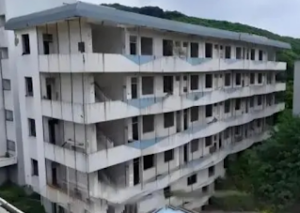
A video recently revealing historical data about the Zhangmutou Detention Center (樟木头收容所) in Dongguan, Guangdong, has sparked widespread shock on social media. According to materials cited by the blogger, over 11 years, from 1992 to 2003, the facility processed a total of 830,000 detainees. However, within the vast volume of official archives, key figures concerning “abnormal deaths,” “escape-related disappearances,” and “human trafficking” remain conspicuously absent.
Estimated Figures: Thousands of Lives Lost in a “Lawless Zone”
Based on historical context and conservative ratios, the blogger estimates that during these 11 years, between 800 and 4,000 individuals may have died inside the Zhangmutou facility due to abuse, starvation, illness, or beatings. Meanwhile, those permanently missing, due to escape, trafficking, wrongful repatriation, or unidentified bodies, are estimated to range from 2,500 to 8,000. A consensus among the public suggests that the number of abnormal deaths and disappearances at the site reaches at least into the thousands.
Although discussions quickly gained traction online, they were soon met with large-scale censorship by relevant authorities.
The “Bloody History” of the Custody System Through the Sun Zhigang Case
When mentioning the Zhangmutou facility, the most unforgettable event for the public is the “Sun Zhigang incident” (孙志刚) in 2003. While this case led to the abolition of the Custody and Repatriation Regulations, a commentator pointed out that Zhangmutou is not an isolated example. From the Jiabiangou labor camp (夹边沟劳改农场) in Gansu targeting intellectuals in the late 1950s, to the Zhangmutou facility in Guangdong during the economic transition of the 1990s targeting migrant populations, and to the contemporary Jiujingzhuang (久敬庄) “black jail” in Beijing under the stability maintenance system, the underlying logic of governance shows a striking continuity.
Observers analyze that such facilities have played similar roles across different periods:
1) The dehumanization of specific groups (such as “rightists,” “three-noes persons,” or petitioners) strips them of legal protection.
2) The usage of physiological limits or confined environments to break the individual’s will.
3) The creation of “social black holes” beyond judicial oversight allows violence to be carried out outside the law.
The Consequences of Unchecked Expansion of Power
A commentator argues that from Jiabiangou to Jiujingzhuang, these cases reflect how, in the absence of constitutional constraints, power can arbitrarily suppress individual rights under grand narratives such as “revolutionary purity,” “economic order,” or “social stability.”
“These place names are not merely geographic coordinates, but symbols of extrajudicial power,” one commentator noted. When urban governance shifts toward “exclusionary” administrative exile, and the implementation of violence becomes increasingly marketized and privatized (such as hiring security companies to intercept petitioners), the basic human rights of ordinary citizens will face systemic threats.
Although the Custody and Repatriation System has become history, vigilance across society regarding various forms of “disguised custody” and “illegal detention” has not disappeared. History shows that if the rule of law does not return, and respect for individual rights does not become a core value, tragedies like Zhangmutou and the shadow of Jiabiangou may reemerge in new forms under the disguise of “stability maintenance” or other justifications.
Special Correspondent Gao Zhensai for ChinaAid