
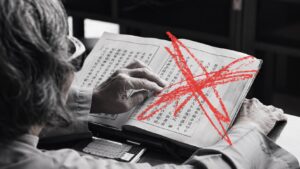
China ranks seventh worldwide for Bible shortages, with an estimated 5 million to 10 million Christians who want a Bible but do not have one, according to a new international study highlighting government restrictions on Scripture access.
The 2026 Bible Access List, released in October by the Bible Access Initiative, examined 106 countries. Researchers found that more than 125 million Christians worldwide want a Bible but lack one, while more than 500 million face restrictions on accessing Scripture.
ChinaAid founder and president Bob Fu has warned that government efforts to prevent children from receiving Christian instruction have intensified.
He said authorities have moved toward “explicitly banning children from access to any Bible, even Bible stories.”
Bible distribution itself has also led to criminal prosecution. In Hohhot, Inner Mongolia, Wang Honglan and eight other Christians were arrested in April 2021 over discounted Bible sales and convicted of “illegal business operations” on April 10, 2025.
Bible printing under state control
China’s shortages persist despite the country’s role as a major Bible producer. The Amity Printing Press in Nanjing has produced hundreds of millions of Bibles, but a substantial majority of its historical production has been exported overseas.
Within China, government-approved Bibles are distributed primarily through state-registered churches affiliated with the Three-Self Patriotic Movement. Printing and distribution remain tightly regulated, limiting access through independent churches, ordinary bookstores and online retailers.

The Hohhot case involved legally published Bibles sold below market rates to low-income Christians to encourage Scripture reading. Prosecutors characterized the network as an “organized criminal group,” citing transactions exceeding 40 million yuan and designating Wang as the principal offender.
Defense attorney Fang Xiangui disputed the prosecution’s characterization, arguing that the activities were charitable efforts to spread the Christian faith and involved no profit motive.
Government pressure has also forced Christian businesses to close. In October 2025, mainland China’s largest privately run Christian bookstore, Beijing Morning Light Bookstore, announced its closure after years of government scrutiny.
The bookstore faced repeated inspections dating to 2012 and narrowly avoided closure several times. Its deputy general manager, Li Wenxi, was arrested by Shanxi police and sentenced on May 9, 2013, to two years in prison for “illegal business operations.”
China’s unregistered house churches also face police raids, confiscation of religious materials and other penalties that hinder Scripture distribution. Authorities have frequently used “illegal business operations” charges against those distributing religious materials, including Bibles.
Digital access presents additional challenges. The 2026 report notes that foreign Christian websites are blocked in China, Bible apps have been removed from app stores, and expanded online identification requirements make religious activity increasingly traceable.
Researchers emphasize that the existence of digital Bibles does not guarantee safe access. Across 48 countries, an estimated 277 million Christians face online environments where accessing Scripture is restricted or potentially dangerous.
Restrictions extend to children
Government restrictions also affect the next generation of Chinese Christians. Authorities in several provinces have prohibited minors from attending church services or religious education, while national regulations restrict religious instruction and communication with children through online platforms.
ChinaAid’s 2025 annual report documented orders barring children from churches in Wenzhou, Zhejiang Province. A Catholic church in Henan Province was also ordered to suspend worship activities after a minor participated in a service.

Although China has no nationwide law explicitly prohibiting minors from attending churches, local administrative directives have been used to enforce such restrictions, according to ChinaAid’s findings.
The pressure has extended into schools. In September, ChinaAid reported that police in Hunan Province questioned children from Christian families, with some students pressured to sign documents accusing house churches of religious “brainwashing.”
The Bible Access Initiative’s findings underscore the distinction between producing Scripture and making it accessible. For millions of Chinese believers, government controls on distribution, religious gatherings and digital communications continue to limit their ability to obtain and use the Bible.
Founded in 2002, ChinaAid is an international Christian human rights organization committed to promoting religious freedom and the rule of law in China through advocacy, legal support, and international awareness campaigns.