
By Josh Shepherd
Nine years after Chinese human rights lawyer Gao Zhisheng disappeared, his wife still has no answers about whether he is alive, where he is being held, or when their family might see him again.
For Geng He, the anniversary of his disappearance on Aug. 13 brings renewed grief, but also gratitude that supporters around the world continue to remember her husband, once one of China’s most prominent advocates for religious believers and other vulnerable groups.
“Despite the passage of time, so many people have not forgotten Gao Zhisheng,” Geng said in an email interview.
Nominated three times for the Nobel Peace Prize, Gao Zhisheng, today 62, has represented house church Christians, Falun Gong practitioners, victims of forced evictions, and others whose cases carried political risk. He was forcibly disappeared in 2017, and his whereabouts remain unknown.
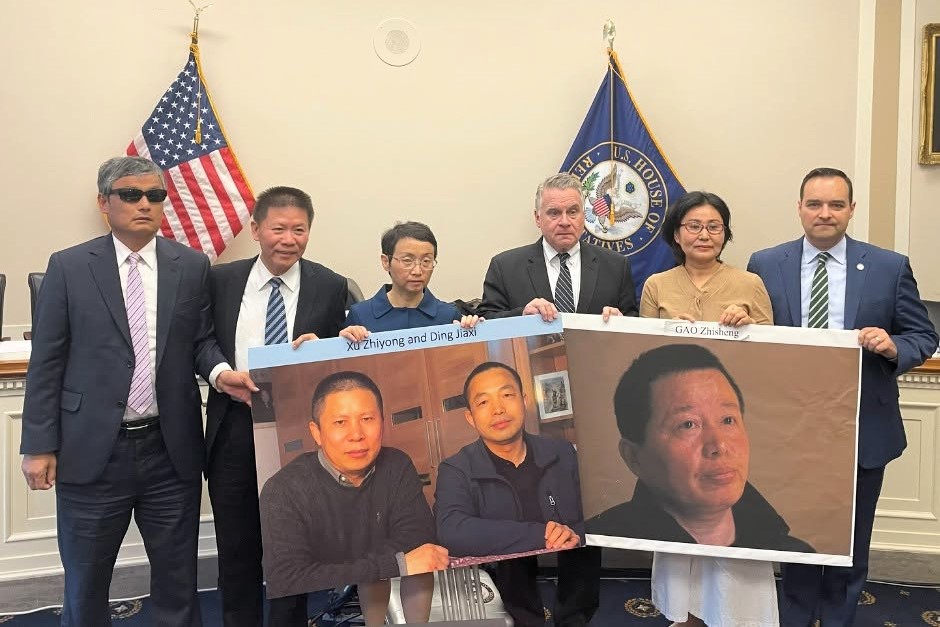
Congressional testimony and published reports have documented years of detention and alleged torture before his disappearance. Geng He, 58, who today resides in San Francisco, believes the Chinese government targeted her husband because of his commitment to defending citizens’ rights and holding authorities accountable.
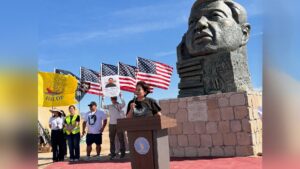
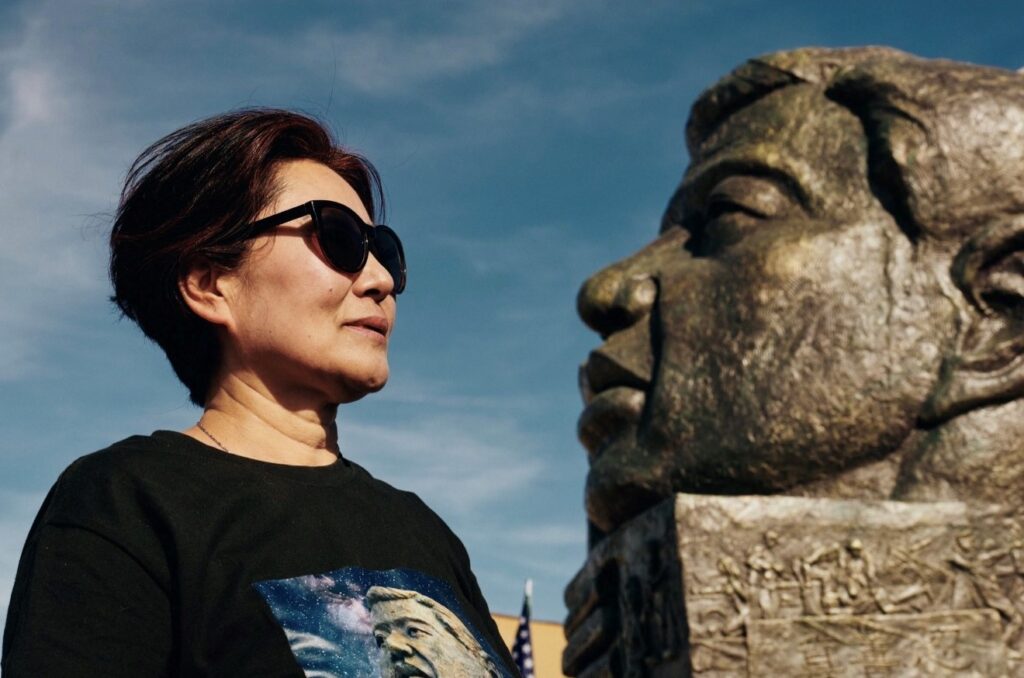
On April 4, supporters unveiled a 13-foot stone monument of Gao’s face at Liberty Sculpture Park in southern California, an art installation dedicated to democracy and human rights. Alongside artist Chen Weiming, Geng participated in its design and creation.
The current Congress has introduced H.R. 5303: Freedom for Gao Zhisheng and All Political Prisoners Act, to urge U.S. leaders to “use available diplomatic tools to seek the release of political prisoners.”
In a lightly edited interview, attorney Gao’s wife reflects on nine years without answers, the meaning of the statue, and her continuing appeal to Chinese authorities.
5 QUESTIONS WITH ATTORNEY GAO’S WIFE, GENG HE
1. What is your reaction as advocates mark 9 years since Gao Zhisheng disappeared?
Geng He: As his wife, I have asked myself countless times: Where is he? Is he still alive? What is his physical condition? For nine years, I have received no answers. Living with these unanswered questions has become a constant source of anguish and an inescapable part of our daily lives.
Today, my children and I are all U.S. citizens, and I am now in my fifties. Our greatest hope is that Gao Zhisheng will soon regain his freedom so that our family can finally be reunited.
I hope the international community will continue to pay close attention to Gao Zhisheng’s case and press the Chinese authorities to disclose his whereabouts and restore his freedom. This is not only the plea of a wife and her family, but also a call to uphold the principles of human rights, the rule of law, and human conscience.
2. Mr. Gao took on many politically difficult cases. Why has the Chinese government viewed his work on behalf of vulnerable groups as such a serious threat?
Geng He: Gao Zhisheng represented many of China’s most vulnerable people, including house church Christians, Falun Gong practitioners, victims of forced evictions, and families affected by mining disasters. He firmly believed that the law should protect every individual equally and that no one should be denied their rights because of their identity, religious belief, or political views.
Under the Chinese Communist system, however, any independent effort to defend citizens’ legal rights or hold government officials accountable under the law can be viewed as a challenge to the authority of the state.
I believe that in any society governed by the rule of law, a lawyer should never be punished simply for fulfilling his professional duty and speaking on behalf of those without a voice. Gao Zhisheng’s persecution is not only a personal tragedy — it is also a stark reflection of the grave challenges facing the rule of law and human rights in China.
3. Although this is a painful subject, could you describe how Mr. Gao’s disappearance has affected your family?
Geng He: For many people, this may be a difficult topic. For me, however, it has been a prolonged form of emotional torture, reopening wounds that have never had the chance to heal.
The pain has not been confined to a single moment. It has shaped every day of our lives. Throughout our children’s upbringing, there has always been an irreplaceable absence.
During the most important stages of their lives — their childhood, adolescence, and journey into adulthood — they were deprived of a father’s love, guidance, encouragement, and support. That loss is not only their personal tragedy, but also a lifelong sorrow our entire family continues to carry.
As their mother, I have done everything I could to raise and support them. But I have always known that no mother can replace the unique and irreplaceable role a father plays in a child’s life.
Even today, this subject remains deeply painful for me. I would prefer to stop here.
4. Liberty Sculpture Park in southern California recently unveiled a statue honoring your husband. What does this memorial mean to you?
Geng He: For nine years, Gao Zhisheng’s name and suffering have continued to resonate with people around the world who care about freedom, human rights, and the rule of law.
The sculpture, Gazing at the Starry Sky: Gao Zhisheng, honors not only his courage as a lawyer who defended vulnerable people, but also the enduring values of dignity, conscience, and justice.
Creating the monument was deeply personal for me. I participated in every stage of the process — from the initial design and clay modeling to the final installation. Over nearly a year of work, I often felt as though Gao was drawing closer to me again, and the project allowed me to reconnect with his convictions and the strength that sustained him.
What grieves me is that he still cannot stand before this monument or witness the love and support expressed by friends around the world.
I hope the sculpture serves as a reminder that a person’s body may be imprisoned or taken away, yet their convictions, conscience, and pursuit of justice can never be erased. I also hope it encourages more people to remember Gao Zhisheng and others who remain imprisoned or disappeared while waiting for justice.
5. Have you received any recent information from the Chinese authorities regarding your husband? What would you like to say to them?
Geng He: No. For nine years, the Chinese authorities have never provided our family with any truthful information about Gao Zhisheng’s whereabouts, nor have they offered any official explanation of his condition.
For any family, living with such uncertainty is an unbearable burden. As his wife, I want answers to the most basic questions: Where is my husband? Is he alive? These are rights that every family should have, yet they have remained completely out of reach for us.
I want to say to the Chinese authorities that Gao Zhisheng is a lawyer who simply fulfilled his professional duty by providing legal assistance to those in need. Every government has an obligation to respect fundamental human rights, including the rights to truth, human dignity, and freedom.
Once again, I call on the Chinese authorities to immediately disclose Gao Zhisheng’s whereabouts and restore his freedom, so that our family — separated for 17 years — may finally have the opportunity to reunite.
This article has been updated to include a reference to a related bill active in Congress.
Josh Shepherd is editor of ChinaAid News. Founded in 2002, ChinaAid is an international Christian human rights organization committed to promoting religious freedom and the rule of law in China through advocacy, legal support, and international awareness campaigns.