
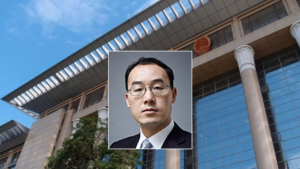
(Beihai, Guangxi Province, southern China — July 2, 2026) Defense attorney Zhang Lei says prosecutors in southern China are obstructing his efforts to represent detained Beijing Zion Church Pastor Dr. Wang Lin, the latest dispute in one of China’s most closely watched religious freedom cases.
The allegations come just weeks after authorities released nine Zion Church members on bail while escalating criminal charges against nine remaining church leaders, including Wang.
Zhang said the Yinhai District People’s Procuratorate in Beihai repeatedly refused to let him review the prosecution’s case files despite accepting his authorization documents. He and outside legal analysts argue the additional requirements imposed by prosecutors have unnecessarily delayed the judicial process and may conflict with China’s Criminal Procedure Law.
Defense attorney denied case file access
On June 23, Zhang went to the Yinhai District People’s Procuratorate to formally submit authorization documents to represent Wang. Although prosecutors accepted the paperwork, they declined his request to review the case files, which defense attorneys say is essential to preparing Wang’s legal defense.
Article 49 of the Supreme People’s Procuratorate’s Rules of Criminal Procedure requires prosecutors to arrange access to case files within three working days after a defense attorney submits such a request. Zhang said that after more than three working days had passed, prosecutors instead imposed an additional requirement before granting access.
According to Zhang, prosecutors demanded not only a written statement from Wang dismissing his previous attorney but also a formal “termination of representation” document from the former attorney’s law firm. Zhang, who was the only attorney submitting representation documents that day, said prosecutors also insisted on reviewing the status of lawyers who had represented Wang during the police investigation stage.
Legal analysts questioned whether the additional requirements were intended to prolong the review process and effectively deprive defense counsel of its statutory right to examine the case files. Zhang described the prosecutors’ explanation for denying access as “absurd.”
Family disputes attorney restriction
Wang’s wife, Su Ziming, publicly criticized what she described as a new “three-party consent” requirement for changing attorneys.
“Has the Civil Code been secretly amended? Since when has a representation agreement required the consent of three parties to be terminated? Since when has the client’s own decision become merely a reference? Since when has a law firm gained the authority to decide whether a client may change attorneys?” Su said in a public statement.
Su noted that Article 933 of China’s Civil Code allows either party to terminate an entrustment contract at any time. She argued that Wang’s written dismissal of his previous attorney and Zhang’s properly filed representation documents should have been sufficient and alleged prosecutors created additional legal obstacles without any basis in law.

Latest twist in the Zion Church crackdown
The dispute stems from the ongoing “10.9 Zion Church Case,” a sweeping crackdown launched in October 2025 against Beijing Zion Church, a prominent Beijing-based house church network with congregations in multiple Chinese cities.
Authorities initially detained 18 pastors and church coworkers in Beihai before releasing nine on bail on June 18 after more than eight months in custody. The remaining nine, including Wang, continue to face prosecution.
Prosecutors have reportedly upgraded the remaining defendants’ cases from allegations involving illegally using information networks to the more serious charges of “illegal business operations” and “fraud,” although defense attorneys say they have not yet been granted full access to the prosecution’s evidence. Church leaders deny the allegations, arguing that Bible training, voluntary offerings and mutual support among church members are ordinary religious activities rather than criminal conduct.
Wang, a Doctor of Theology and one of the church’s senior pastors, has long been involved in pastoral ministry and theological education. Authorities, however, have characterized aspects of the church’s financial activities as economic crimes.
International religious freedom advocates say Chinese authorities increasingly rely on economic crime allegations—including “illegal business operations”—to prosecute independent house churches that refuse to join the state-controlled Three-Self Patriotic Church.
Procedural concerns draw wider scrutiny
The prosecution has attracted sustained attention from legal advocates and religious freedom organizations inside and outside China, who argue the proceedings could set an important precedent for the treatment of independent house churches.
Critics say the dispute over defense counsel’s access to the case files reflects broader concerns that local authorities are relying on unwritten practices that conflict with China’s Criminal Procedure Law and Civil Code. They argue that restricting defense attorneys’ statutory rights undermines the fairness of criminal proceedings.
In response to what they describe as unlawful interference in the case, family members and outside observers have publicly identified several local officials they believe bear responsibility for the prosecution. They include Yinhai District Chief Prosecutor Zhou Zhongxia, Beihai Municipal Committee Secretary Li Chu, Beihai Political and Legal Affairs Commission Secretary Cai Kehui, and Beihai Mayor Li Gang.
Human rights groups say they are closely watching whether the Supreme People’s Procuratorate or other higher authorities will intervene to review the alleged procedural irregularities as the case moves toward possible indictment and trial.
Gao Zhensai is a special correspondent for ChinaAid News. Founded in 2002, ChinaAid is an international Christian human rights organization committed to promoting religious freedom and the rule of law in China through advocacy, legal support, and international awareness campaigns.