
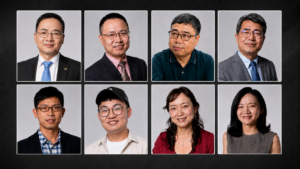
(Beijing, China – July 13, 2026 – Analysis) China’s crackdown on Beijing’s unregistered Zion Church has entered a pivotal judicial phase. Informed sources report that the “Zion 10.9 Church Case” has been transferred to the procuratorate for review before possible indictment, marking a significant step in one of China’s highest-profile cases involving a house church.
Authorities have split the original mass detention case into separate prosecution tracks for different pastors and church coworkers, with defendants now facing different criminal charges.
Wang Zhong and Wu Qiuyu have been charged with illegal business operations. Yin Huibin, Gao Yingjia, Wang Cong, Liu Zhenbin, and Lin Shucheng face fraud charges.
Meanwhile, Pastor Wang Lin (Franklin Wang), president of Zion Bible Seminary and one of the case’s central figures, has been charged with both fraud and illegal business operations.
Wife’s public statement discloses arrest details
“My husband Wang Lin is innocent,” said Su Ziming, wife of Pastor Wang Lin, in a video published July 5 under her X pseudonym, Sarah Su. She said her husband was simply fulfilling his responsibilities as a Christian pastor, adding, “Faith is not a crime, and shepherding the church is not a crime.”
The video disclosed for the first time details of Wang Lin’s arrest during authorities’ sweeping crackdown on Zion Church in October 2025. According to Su, investigators pressured him during interrogations by exploiting his concern for his family’s safety.
“The relevant authorities showed him my arrest notice, and threatened him with the safety of our two children and me, and also threatened that he would not be allowed to hire a lawyer,” Su said. She alleged they also pressured him to plead guilty and sign a confession.
According to Su, Wang Lin believed authorities were targeting only his family. Hoping to protect his wife and children, he signed the documents under duress. She stressed the signatures “were not his true intention, nor do they represent an admission of guilt.”
Human rights organizations and defense lawyers have repeatedly documented allegations that Chinese authorities use pressure involving family members during investigations of politically or religiously sensitive cases.
The four individuals released on bail before June 18 remain under police investigation. Likewise, official notices accompanying many of the nine June 18 bail releases stated that detention had expired while the underlying criminal cases remained unresolved.
In total, 13 church members have now been released on bail. It remains unclear whether their cases have advanced to prosecutors for review or whether investigators have exceeded the legal investigation period permitted under Chinese law.
From mass arrests to judicial separation
The crackdown began on Oct. 9, 2025, when Chinese authorities launched one of their largest operations in recent years against the unregistered Zion Church. Authorities initially detained about 30 church members and coworkers during coordinated raids, with 20 later placed under criminal detention.
As the case has progressed, authorities have released some detainees while continuing criminal proceedings against others. On June 18, nine church members were released on bail, while prosecutors continued building cases against nine others.
On July 3, founding pastor Ezra Jin was released from detention and permitted to travel to the United States following high-level U.S.-China diplomatic engagement. President Donald Trump announced the development after talks with Chinese leader Xi Jinping, while Secretary of State Marco Rubio later confirmed Jin’s arrival in the United States. ChinaAid also noted that the release followed months of sustained advocacy by Jin’s family and American political leaders.
The development was widely viewed as a rare diplomatic breakthrough in an individual religious freedom case. However, it has not changed the legal circumstances facing the remaining church leaders still in detention.
While Beijing’s broader diplomatic engagement with Washington may have contributed to Jin’s release, it has not produced broader relief for the remaining defendants, including Pastor Wang Lin. It remains uncertain whether authorities will grant additional bail releases, expand exemptions from prosecution, or proceed with criminal trials.
The political logic behind economic charges
The Zion Church case has become a significant test of religious freedom within the broader context of U.S.-China relations.
Chinese authorities have characterized religious offerings, the printing of religious publications, and theological education conducted by the church as criminal acts of fraud and illegal business operations.
In recent years, Chinese authorities have increasingly relied on economic crimes such as fraud and illegal business operations when prosecuting leaders of unregistered churches. Framing the cases this way allows officials to present them as ordinary criminal matters rather than prosecutions based on religious belief, reducing international scrutiny over allegations of religious persecution.
More broadly, although China continues to promote governance according to law, cases involving political security, ideology, or organizations operating outside direct state supervision—including house churches—often demonstrate that Communist Party priorities outweigh ordinary legal procedures.
Throughout contemporary Chinese history, decisions by the country’s top political leadership have often influenced the release of political prisoners and religious believers.
In numerous cases, diplomatic engagement by Western governments and sustained international pressure have contributed to the early release of dissidents and religious prisoners, often on humanitarian grounds or as gestures of goodwill.
Even so, there is little indication Chinese authorities intend to address the broader structural restrictions facing independent religious communities. As long as the Communist Party continues to regard unsanctioned religious activity as a potential challenge to its ideological authority, prospects for greater religious freedom—and for a judiciary operating independently of political priorities—are likely to remain limited.
Gao Zhensai is a special correspondent for ChinaAid News. Founded in 2002, ChinaAid is an international Christian human rights organization committed to promoting religious freedom and the rule of law in China through advocacy, legal support, and international awareness campaigns.