
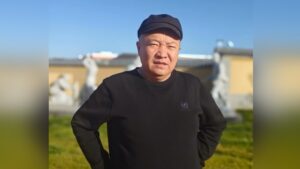
(Xinjiang – May 28, 2026) Zhengis Reskhan, a prominent Kazakh writer and member of the China Writers Association, has been missing for more than two months in the Altay and Hami regions of Xinjiang in northwestern China.
His eldest son, Zhengis Nartay, a Christian believer who now lives in Kazakhstan, issued a public appeal Sunday (May 24), saying his father was taken away by local police in mid-March and has not been heard from since. He called on the international community and human rights organizations to pay attention to the case.
According to written statements provided by the family and public records, 57-year-old Zhengis Reskhan is considered one of the leading figures in Xinjiang’s literary circles. His titles include editor-in-chief of a Kazakh-language literary magazine in Hami City, associate research librarian at the Barkol County cultural center, and former chairman of the Hami Regional Writers Association.
Over decades of literary work, Reskhan published 13 novels, several of which were translated into Chinese and published domestically. He also received Xinjiang’s highest literary honor, the “Tianshan Literary Prize.”
“It has been more than two months since my father was forcibly taken away, and we still have no official information about where he is or what condition he is in,” Nartay said in an interview.
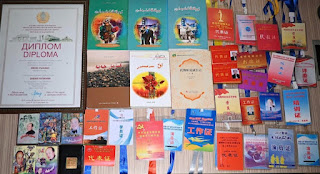
According to Nartay, authorities repeatedly summoned Reskhan for short interrogations beginning in late December 2025. He said his father was forcibly detained on March 19, 2026, after which all contact with the outside world ceased.
The statement said family members later visited the Barkol County Public Security Bureau and the local procuratorate seeking information about Reskhan’s situation. They reportedly received no formal legal documents, detention notices, or clear answers.
In recent years, the treatment of ethnic minority intellectuals in Xinjiang has drawn growing scrutiny from the international community and human rights organizations. Nartay also said authorities had long held his father’s passport, while his social media accounts and literary publications faced varying degrees of restriction.
“Even travel within China was strictly monitored and restricted,” Nartay said. “Whenever my father stepped outside the Hami region of Xinjiang, his phone would immediately be flooded with calls from police, community officials, and state security departments asking why he had left Hami and when he would return.”
Nartay said he left China in 2017 to study in Kazakhstan, after which communication with his parents became increasingly difficult.
“After I repeatedly tried to communicate with them, their replies became very mechanical,” he said. “They would only repeatedly say, ‘The Party, the country, and we ourselves are all doing very well. Don’t worry about us. Live well and keep living well.’”
As a member of the ethnic Kazakh community spanning China and Kazakhstan, Reskhan attended the Fourth World Congress of the Kazakhs in Astana in 2011, where he promoted cultural exchanges between the two countries.
At present, international institutions including U.N. human rights bodies and Kazakhstan’s foreign ministry have not publicly commented on the case.
Nartay said he has appealed for assistance from Kazakh President Kassym-Jomart Tokayev and Chinese state leaders. He also said he is willing to speak further with international media in hopes of bringing greater transparency to his father’s case.
Founded in 2002, ChinaAid is an international Christian human rights organization committed to promoting religious freedom and the rule of law in China through advocacy, legal support, and international awareness campaigns.
Zhengis Nartay can be contacted for interviews via:
Email: Koktay0612@gmail.com or WhatsApp / Signal / Tel: +77780060612