
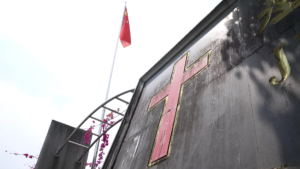
(Analysis) Chinese authorities are using a nationwide crackdown on unregistered organizations to shut down independent churches and religious fellowships, raising concerns about growing restrictions on religious freedom and the government’s efforts to bring faith communities under state control.
In July, China’s Ministry of Civil Affairs reported taking action involving 702 organizations during the first half of 2026. Of those, 63 were formally banned, 399 ordered dissolved, 163 flagged as suspected illegal social organizations or for investigation, and 77 guided toward registration.
The ministry presented the campaign as a success in maintaining public order, emphasizing action against organizations falsely claiming government affiliations or using titles such as “China” or “Chinese” in their names while engaging in unauthorized activities.
However, lists of banned organizations released by local authorities show that independent Christian churches and religious fellowships are also being targeted. From coastal cities to inland provinces, officials have repeatedly cited the same justification: conducting organizational activities without government registration.
Independent churches face growing pressure
Many Chinese house churches resist joining the state-controlled Three-Self Patriotic Movement because of sincerely held religious convictions about church independence. Some, including Zhejiang’s Yayang Church, have also rejected demands to display the Chinese flag or install surveillance cameras, ChinaAid reported.
On Jan. 22, Beijing’s Haidian District Civil Affairs Bureau formally banned Trinity Church, citing violations of China’s Regulations on Religious Affairs and regulations governing social organizations. The official notice stated that the church had conducted activities without registering as a social organization.
On Aug. 28, authorities in Guangzhou’s Haizhu District issued a similar ban against Yongji Church, also known as Eternal Foundation Church. The notice likewise cited unregistered organizational activity as grounds for shutting down the congregation.
The crackdown has extended into central and southeastern China. In April, authorities in Zhuzhou, Hunan province, banned Tian’en Church. On June 26, the Jiangxi Provincial Department of Civil Affairs listed the China Christian Church and Poyang Lake Fellowship among organizations formally banned.
Authorities have also taken action against religious organizations with connections across provincial boundaries. In late August, officials in Changzhou, Jiangsu province, announced a ban on the Repentance and Holiness Ministry, also known as the Kenya Missionary Group.
Public records indicate that the organization previously faced enforcement actions in Yiyang, Hunan province, and in Jilin province. Although the records do not establish direct coordination, the repeated bans illustrate the challenges facing religious networks operating across provincial boundaries.
In Nanjing, authorities also dissolved two unregistered civil society groups—the Yuelai Yuehao Arts Alliance and the Yilu Business Association Presidents’ Alliance—despite acknowledging that their activities had not caused serious consequences. The action illustrates the campaign’s reach beyond religious organizations.
Restrictions through registration
Under China’s regulatory framework, independent congregations face significant barriers to registering without joining the state-sanctioned Three-Self Patriotic Movement. Those that refuse government oversight can then be penalized for operating without registration, even when their activities consist of peaceful worship.
Religious freedom advocates warn that such regulations allow authorities to restrict independent worship through administrative procedures rather than explicitly prohibiting religious belief. The result is increased pressure on congregations seeking to maintain their independence from the state.
Government enforcement reports group suspected fraudulent organizations and independent congregations under the broad designation of “illegal social organizations.” Critics say this obscures the distinction between fraud and peaceful worship; the Trinity and Yongji notices cited lack of registration, not fraud or violence.
Authorities have also encouraged citizens to report unauthorized religious activities. ChinaAid previously reported on rewards offered in Henan province, while Human Rights Watch documented similar measures introduced in more than a dozen Chinese cities during the first half of 2026.
For China’s house churches, the consequences extend beyond the loss of individual meeting places. As authorities increasingly use registration rules to restrict independent organizations, congregations face growing uncertainty about their ability to gather, maintain community connections and practice their faith without government interference.
Gao Zhensai is a special correspondent for ChinaAid News. Founded in 2002, ChinaAid is an international Christian human rights organization committed to promoting religious freedom and the rule of law in China through advocacy, legal support, and international awareness campaigns.