

(ZHEJIANG, CHINA — October 23, 2026) — A church demolished during a crackdown on independent Christian worship in mountainous southern Zhejiang has been replaced by a paved public park, with China’s national flag flying prominently where Yazhong Church once stood.
The former sanctuary, also known as Yayang Church, stood in Yayang Town, Taishun County, near Wenzhou, a city sometimes called “China’s Jerusalem” because of its large Christian population. Authorities demolished the building in May after months of confrontation with congregants.
The church belongs to the Local Church movement, also known as the “Assembly” tradition, which traces its roots to early 20th-century Chinese preacher Watchman Nee and has historical ties to Britain’s Brethren movement. The congregation has maintained the independent traditions of local Wenzhou churches, outside state-controlled religious structures.
A decade of resistance
The congregation’s confrontations with authorities date back to Zhejiang’s 2014 campaign to remove crosses from churches and demolish religious structures. As previously documented by ChinaAid, local Christians were among those who actively resisted the campaign.
The most recent conflict began in June 2025, when officials required religious venues to display the Chinese flag under the government’s “Sinicization of religion” campaign and its “Five Entries and Five Transformations” policy.
On June 24, township officials forcibly entered the church property to install a flagpole, prompting resistance from members. Authorities subsequently summoned worshippers for questioning and threatened them, according to local sources.
The confrontation escalated Dec. 14-15, 2025, when more than 1,000 police officers and other security personnel were deployed to the church and surrounding gathering sites. More than 100 believers were detained for questioning, although most were subsequently released.

In January, authorities removed the church’s cross and bell tower. On May 19, heavy machinery destroyed the main sanctuary amid a security lockdown, following the evacuation of nearby residents and restrictions on access to the site.
According to an earlier ChinaAid investigation, authorities established checkpoints, monitored the surrounding area and prevented photography. Personnel reportedly stopped anyone suspected of taking pictures, sometimes inspecting their phones or removing them from the scene.
Twenty believers remain in custody
Beyond those briefly detained during the December raids, 27 Christians have faced more prolonged detention in connection with the crackdown, according to informed sources. Two were released in 2025 and five in 2026, including one granted bail because of illness, leaving 20 in custody.
None of the cases has reached a final court judgment, sources said, and legal proceedings remain unresolved even for those released. Charges include “picking quarrels and provoking trouble,” a broadly defined public-order offense frequently used against dissidents and independent civil society groups.
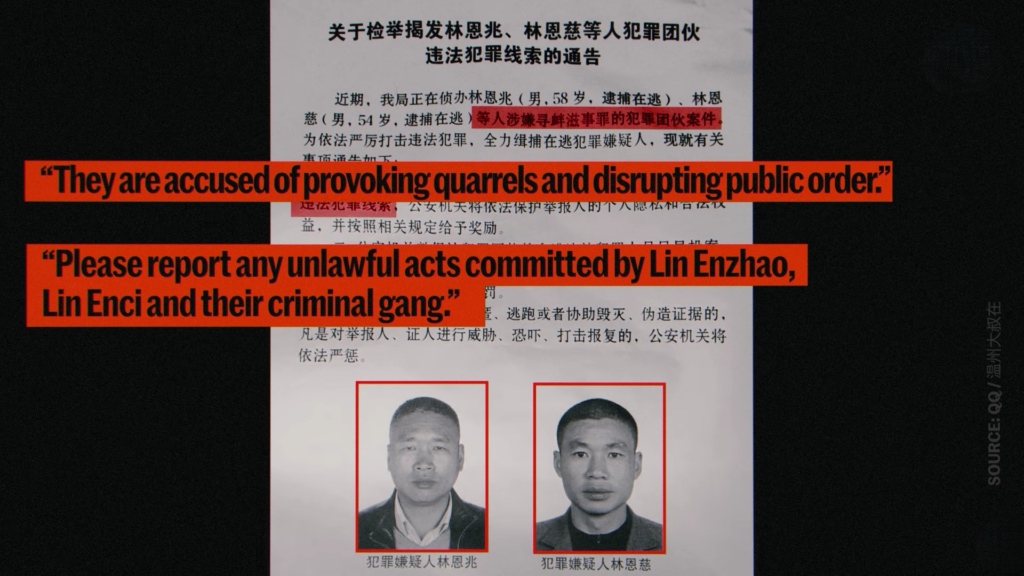
Among those detained are four brothers—Lin Enzhao, Lin Enci, Lin Enfeng and Lin Enmin—as well as Ji Aijuan and her husband, Lin Endian, who oversaw the church’s children’s Sunday school ministry.
The developments come ahead of the Nov. 18-19 Asia-Pacific Economic Cooperation summit in Shenzhen, where President Donald Trump and Chinese leader Xi Jinping are expected to meet. U.S. advocates have urged the White House to press China over imprisoned Christians and broader issues of religious freedom.
With the main sanctuary destroyed and believers still facing prosecution, local Christians have dispersed into homes for smaller, discreet gatherings, according to sources. The congregation’s longstanding public presence has been replaced by worship carried out largely beyond public view.

The transformation of Yazhong Church’s former property—from a sanctuary topped by a cross to a public park displaying China’s national flag—illustrates the growing reach of state authority over independent religious communities.
Yet the congregation’s continued gatherings show that eliminating its sanctuary has not ended its religious life. With 20 believers still detained and their legal cases unresolved, the conflict between the church and authorities continues despite the site’s physical transformation.
Gao Zhensai is a special correspondent for ChinaAid News. Founded in 2002, ChinaAid is an international Christian human rights organization committed to promoting religious freedom and the rule of law in China through advocacy, legal support, and international awareness campaigns.