
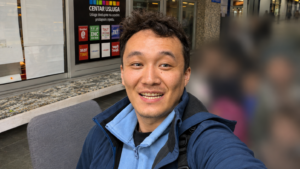
(OSLO, NORWAY — Nov. 17, 2026) A Kazakh Christian who campaigned for his father’s release from detention in northwestern China’s Xinjiang region has reached Norway with his wife and three young children after fleeing what he described as mounting pressure from authorities in Kazakhstan.
Zhengis Nartay, in his 30s, said he learned after arriving in Norway that a Chinese court had sentenced his father, prominent Kazakh writer Zhengis Reskhan, to six years and eight months in prison. The family has not received a written verdict.
In a Nov. 12 account, Nartay described pressure he attributed to Kazakh officials, alleged mistreatment by Croatian police, and the loss of contact with his mother in Xinjiang.
His experience raises concerns about transnational repression targeting critics of China’s policies.
Father’s detention and pressure in Kazakhstan
Chinese police detained Reskhan, 57, on March 19 in Xinjiang, according to previous ChinaAid reporting. The region in northwestern China has faced international scrutiny for restrictions on the cultural and religious rights of ethnic Kazakhs, Uyghurs and other minorities.
A prominent Kazakh writer, Reskhan edited a literary magazine in Hami, served as a research librarian in Barkol County and chaired the Hami Regional Writers Association. He wrote 13 literary works, some translated into Chinese, won the Tianshan and Junma literary awards and attended a 2011 Kazakh cultural congress in Astana.
According to his family, police accused Reskhan of holding “extremist thoughts” but supplied no legal documentation. Amnesty International raised concerns about his detention in July, and Radio Free Europe/Radio Liberty reported in August that he faced a closed-door trial.
After reaching Norway this fall, Nartay learned about the prison sentence through unofficial channels. Unable to obtain a court ruling, he remains uncertain about the legal basis for the conviction. His contact with his mother via WeChat ended several months ago.
In 2017, Nartay left China and obtained Kazakh citizenship, hoping the change would provide greater security. In May, he appealed to Kazakhstan’s presidential office and Foreign Ministry, as well as the U.S. and Chinese embassies in Astana, seeking help for his father.
At the Chinese Embassy, a guard directed him to leave his appeal in a cardboard box. Nartay said the other institutions accepted his letters, but Kazakhstan’s Foreign Ministry later responded in writing that Reskhan’s case was an internal Chinese matter and Kazakhstan would not intervene.
Seeking further assistance, Nartay contacted Atajurt Kazakh Human Rights and publicized his father’s detention in an online livestream. The case drew international media attention, but he said Kazakh officials began repeatedly contacting him in August, pressuring him to stop speaking publicly.
One official warned, “You should also think about your wife and children,” Nartay recalled. He interpreted the remark as a threat and feared being forcibly returned to China, where he believed his advocacy might expose him to detention.
His concerns came amid a broader crackdown on Xinjiang-related activism in Kazakhstan. In June, a Kazakh court upheld sentences against 19 Atajurt members and supporters following a protest over a Kazakh citizen detained in China.
Family escapes to Norway
Difficulties obtaining visas for Western countries led the family to leave Kazakhstan on Oct. 18 and travel through several countries, Nartay said. They walked through forests and crossed rivers, sometimes sleeping outdoors in near-freezing rain, before entering Croatia from Bosnia on Oct. 24.
Believing that reaching the European Union would offer safety, Nartay sought help from residents when his children’s health deteriorated. He also contacted police, expecting assistance. Residents offered clothing, blankets and money, but Croatian officers stopped them from helping, leaving the family in the rain, he alleged.
At a police station, the family was confined for six days in a room with closed windows and a bathroom door that would not shut, according to Nartay. He alleged they received inadequate food and drinking water.
During their confinement, the children experienced two medical emergencies involving vomiting, loss of consciousness, clenched jaws and bluish discoloration of their faces, Nartay said. He attributed the episodes to hunger and dehydration and said requests for medical assistance went unanswered.
He also alleged that Croatian officers beat him in front of his family when he sought help. Police required the family to sign documents written in Croatian, took their fingerprints and ignored requests to hire a lawyer and interpreter, he said.
The family was released after six days and eventually reached Norway. The allegations about the Croatian police have not been independently verified.
“I am breathing the air of freedom now. No one here will tell me what I should or should not say,” Nartay wrote.
Despite reaching safety, Nartay said his father’s reported imprisonment and his inability to contact either parent remain painful reminders of the repression his family fled.
Gao Zhensai is a special correspondent for ChinaAid News. Founded in 2002, ChinaAid is an international Christian human rights organization committed to promoting religious freedom and the rule of law in China through advocacy, legal support, and international awareness campaigns.